
- Home
- Live Blog
- Breaking News
- Top Headlines
- Cities
- NE News
- Sentinel Media
- Sports
- Education
- Jobs
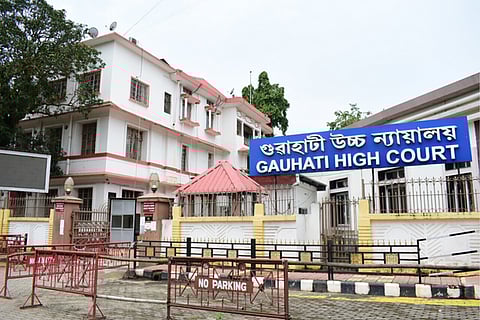
Guwahati, April 6 — The Gauhati High Court has directed four northeastern states — Assam, Nagaland, Mizoram, and Arunachal Pradesh — to submit fresh affidavits disclosing whether any convicts have been released through remission on or after April 2, 2026.
The direction came after the court observed that all four state governments are still actively considering cases for premature release and remission.
Also Read: Assam: Gaurav Gogoi backs Congress candidate, slams govt over development priorities
The order was passed during a hearing before a division bench of Justice Michael Zothankhuma and Justice Kaushik Goswami in a suo motu case (WP(C)(Suo Moto)/2/2025).
The petition was initiated to monitor and supervise how the four states are implementing their remission and premature release policies, in compliance with Supreme Court orders dated April 25, 2025, and November 4, 2025.
The bench noted that affidavits from all four states, filed in accordance with an earlier order dated February 4, 2026, are now on record.
After hearing counsels for all parties and reviewing the affidavits, the bench found that remission cases are still being actively considered by the state governments.
The court observed that the four states have been processing convict cases for premature release in line with their respective remission policies — a process that, in the court's view, warrants continued judicial oversight.
The matter has been adjourned to June 4, 2026, by which date all parties are required to file additional affidavits stating whether any further convict releases through remission have taken place from April 2, 2026, onwards.
The suo motu proceedings stem from a set of directions issued by the Supreme Court of India, which clarified the legal obligations of state governments on remission.
The apex court had held that wherever a government policy exists laying down guidelines for premature release — under Section 432 of the Code of Criminal Procedure (CrPC) or Section 473 of the Bharatiya Nagarik Suraksha Sanhita (BNSS) — the state is obligated to consider all eligible convicts on its own, without waiting for individual applications.
The Supreme Court also ruled that convicts or their families are not required to file a specific application to seek remission consideration. This obligation extends to guidelines contained in jail manuals or any other departmental instructions issued by the government.
States and union territories that do not yet have a remission policy in place were directed by the Supreme Court to formulate one.
The Gauhati High Court's continued supervision signals that it is closely watching whether these states are meeting their constitutional and statutory obligations to eligible convicts.
All four states must now account for any fresh remissions granted since April 2, 2026, when they return to court on June 4.
