
- Home
- Live Blog
- Breaking News
- Top Headlines
- Cities
- NE News
- Sentinel Media
- Sports
- Education
- Jobs
Staff Reporter
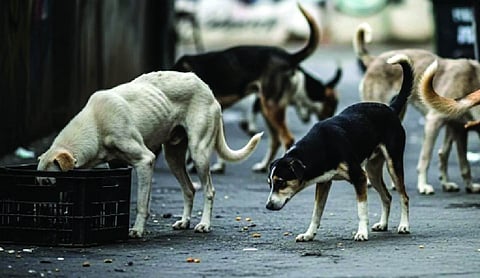
Guwahati: The Gauhati High Court has registered a suo motu case on the strength of a Supreme Court order entrusting the High Court in each state with the responsibility of day-to-day monitoring of the compliance of directions regarding control of the street dog population. The Gauhati High Court will now monitor such compliance in the four states of Assam, Arunachal Pradesh, Mizoram and Nagaland, which are under the HC's jurisdiction.
It can be noticed from the successive orders of the Supreme Court that there is a serious push for a systematic but humane approach regarding street dog populations, with the focus remaining consistently on human safety and the welfare of the animals.
This writ petition (WP(C)(Suo Moto)/2/2026) was instituted on the directions of the Supreme Court (SC) passed in Suo Motu Writ Petition (Civil) No. 5 of 2025. The afore-noted Suo Motu writ petition was instituted by the SC on the basis of a news report highlighting how stray dogs were causing menace in society. The matter was taken up by the Supreme Court for addressing the growing problem of stray dogs in cities and the resulting harm to people, particularly to children, infants and the elderly, because of dog bites and rabies in Delhi and its suburban areas falling within the National Capital Region.
Over a period of several months, the SC issued a series of strong and evolving directions to the municipal authorities, state governments and other bodies. In August 2025, the SC had ordered aggressive action, demanding the authorities round up stray dogs from the NCR towns and shift those dogs to shelters, to sterilize, deworm and vaccinate the stray dogs but not to release them back to the streets. Municipality authorities were directed to speed up the construction of dog shelters and to maintain records.
In fact, the SC warned the authorities that any lethargy or obstruction or any indifference in the execution of the directions would be treated as contempt of the court. A few weeks later, the orders were modified with the direction to round up the stray dogs and also to deworm and vaccinate them before releasing them in the same area from where they were rounded up. However, an exception was made for rabid or suspected rabid or highly aggressive dogs, who were directed to be kept in shelters and not be released on the streets.
Hospitals were directed to stock anti-rabies vaccines, and the authorities were asked to spread awareness through programmes in schools and colleges. The SC also put fetters on unregulated feeding of dogs on the streets and directed the creation of designated feeding zones in each municipality with notice boards and helpline numbers. The authorities were also asked to encourage the adoption of dogs by responsible people, ensuring that such dogs do not return to the streets. Later, the scope of the orders was further extended, and it was made applicable to stray cattle and other animals as they caused road accidents on highways and expressways.
The Supreme Court issued nationwide directions in its latest order on May 19, 2026. The states and the Union Territories have been asked to strengthen and empower the authorities to hold animal birth control programmes by setting up at least one fully functional animal birth control centre in every district and upgrading the sterilisation and vaccination capacity of such centres. The court also directed that the authorities could take a call with respect to Euthanasia for rabid, incurably ill, or dangerously aggressive stray dogs after proper veterinary assessment and following legal protocols.
To ensure effective enforcement of the orders across the country, the SC has entrusted the HC in each state with the responsibility of filing compliance affidavits by the states on or before August 7, 2026, which are to be dispatched by the respective HCs to the SC periodically.
The compliance affidavits by the HC have to be filed by the next date on July 27, 2026.
Also Read: SC Dismisses Pleas to Modify Stray Dog Order, Expresses Concern Over Dog-Bite Surge
