
- Home
- Live Blog
- Breaking News
- Top Headlines
- Cities
- NE News
- Sentinel Media
- Sports
- Education
- Jobs
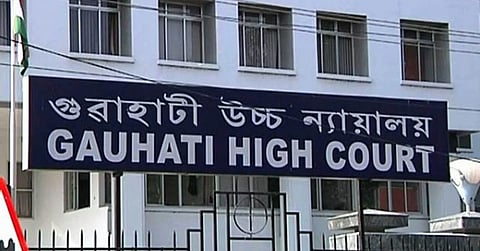
The Gauhati High Court has disposed of a suo moto PIL linked to a deeply distressing 2023 incident in which a mother killed her two minor children — aged two years and 15 days respectively — and subsequently took her own life, with the family reported to have been living in a public toilet due to extreme poverty.
The bench of Justice Kalyan Rai Surana and Justice Susmita Phukan Khaund closed the PIL with a pointed expression of hope and trust that the Assam government would ensure welfare schemes reach the people they are designed for, so that such tragedies do not happen again.
Also Read: India committed to working closely with new Nepal regime: PM Modi
The PIL — registered as PIL(Suo Moto)/6/2023 — was initiated on the basis of a letter dated June 28, 2023, submitted by Debabrata Saikia, then Leader of Opposition in the Assam Legislative Assembly, who brought the incident to the court's attention through media reports.
The letter highlighted that the deceased family had no home and was living in a public toilet, and that the husband was a daily wage earner. The court subsequently issued notice to, among others, the District Commissioner of Lakhimpur, directing an explanation as to why poverty alleviation schemes had not reached the family.
An inquiry report dated September 21, 2023, by the Chief Executive Officer of Lakhimpur Zila Parishad revealed that the family of the deceased's father-in-law was, in fact, receiving benefits under several government schemes — including a job card, ration card, a toilet under PHED, electricity under the Deen Dayal Upadhyaya Gramjyoti Yojana, inclusion in PMAY-G, old age pension, and approval under the Orunodoi scheme.
However, the inquiry also established that the deceased and her husband had separated from the joint family approximately nine months before the incident and begun living independently — a change that had not been communicated to the relevant authorities. As a result, the separated household fell outside the coverage of schemes registered in the father-in-law's name.
A survey conducted across all 36 constituencies of the Missing Autonomous Council, pursuant to court orders, identified 6,253 extremely vulnerable families in the BPL category — underscoring the scale of the challenge on the ground.
The court noted that given the circumstances — where the head of the family was receiving government benefits and the separation of the deceased's household had not been reported to authorities — the non-receipt of scheme benefits by the deceased's family could not be attributed as a fault of any specific officer, including those of the Missing Autonomous Council or the Lakhimpur DC's office.
"The death is only a misfortune that has happened to the family," the court observed.
The bench also explained why it chose not to continue monitoring the matter, noting that doing so would amount to the court taking over executive functions of the state.
"There is no scope for the Court to further monitor such dispensation of schemes, as it would amount to taking over the executive function of the State," the court stated, adding that effective delivery of welfare schemes requires coordinated action between the district administration, concerned Gaon Panchayats, and the Missing Autonomous Council.
The PIL was closed with the court's expressed hope and trust that Assam's government would ensure that welfare benefits reach every vulnerable family — and that poverty-driven tragedies of this nature are never repeated in the state.
