
- Home
- Live Blog
- Breaking News
- Top Headlines
- Cities
- NE News
- Sentinel Media
- Sports
- Education
- Jobs
OUR CORRESPONDENT
DIGBOI: The repeated sightings of wild elephants in residential areas of Digboi early Wednesday have raised concerns about increasing human-elephant conflicts, leading residents to call for more accountability from the Digboi Forest Division and the Assam Oil Division (AOD) regarding the effectiveness of current safety measures.
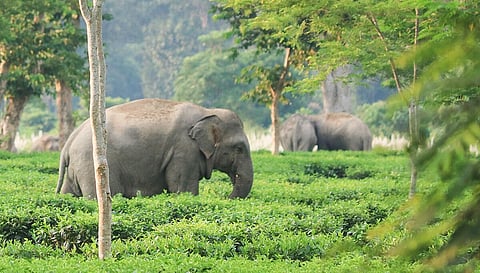
A herd of wild elephants, believed to have strayed from the Upper Dihing Reserved Forest in search of food, entered Gorufatek in the Muliabari area at around 4 a.m. The animals subsequently moved through the Seuj Project locality, Durgabari, Bapapung and adjoining neighbourhoods, damaging banana trees, sugarcane and other vegetation in residential compounds before wandering onto public roads after daybreak.
The sight of the elephants moving freely along busy roads sent panic through the locality, forcing many residents to remain indoors. Morning walkers, commuters and school-going children were among those exposed to potential danger as the herd traversed inhabited areas without any reported intervention to immediately steer it back into the adjoining forest.
Although no loss of life or damage to residential structures was reported in the latest incidents, residents said the absence of casualties was more a matter of fortune than effective management. They cautioned that the unrestricted movement of elephants through densely populated areas and across busy roads could have easily resulted in a fatal encounter.
Wildlife observers attribute the recurring incursions to the gradual degradation of traditional elephant habitats. The Golai and Bogapani belts, once recognised as major elephant corridors, have witnessed increasing habitat fragmentation over the years. The disruption of these natural movement routes is believed to have compelled elephants to venture into human-dominated settlements in search of food, thereby aggravating the human-elephant conflict across the Digboi region.
Also Read: TANGLA: Human-elephant conflict claims another life in Udalguri border villages
