
- Home
- Live Blog
- Breaking News
- Top Headlines
- Cities
- NE News
- Sentinel Media
- Sports
- Education
- Jobs
Guwahati: A promising new chapter in sustainable livelihood development is taking shape around the globally significant Manas Landscape around the Manas National Park & Tiger Reserve, where local farmers and rural youth are embracing scientific beekeeping as a biodiversity-friendly source of income.
As part of ongoing efforts to strengthen conservation-linked livelihoods, leading biodiversity conservation organisation Aaranyak organised a three-day hands-on technical training on scientific beekeeping practices and market linkages recently, benefiting 13 participants from fringe villages surrounding the World Heritage Site.
The initiative has already begun yielding tangible results, with seven trained farmers successfully establishing bee colonies in three project villages, demonstrating the growing potential of beekeeping as an alternative livelihood option.
The training combined classroom learning with practical field exposure, enabling participants to acquire both technical expertise and entrepreneurial skills. Conducted by experienced beekeeper and resource person Naba Mahanta, the programme focused on scientific management of Apis cerana, an indigenous honeybee species ideally suited to the ecological conditions of the region.
Participants gained a comprehensive understanding of the ecological role of honeybees in pollination, biodiversity conservation and ecosystem health, while also exploring the economic opportunities associated with honey production.
Sessions covered scientific hive and colony management, apiary site selection, colony establishment, seasonal management, colony multiplication and routine hive inspections.
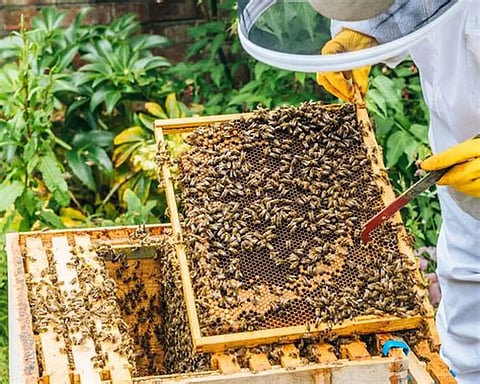
Hands-on demonstrations allowed participants to directly engage with colony handling, honey extraction, filtration, storage and quality management techniques. Special emphasis was also placed on the identification and management of common pests, predators and diseases affecting bee colonies, alongside preventive measures and proper hive hygiene practices.
Recognising the importance of market access in ensuring livelihood success, the training included dedicated sessions on honey value chains, market linkages, packaging and labelling, record-keeping and basic business planning. These discussions equipped participants with the knowledge needed to transform beekeeping from a supplementary activity into a viable small-scale enterprise.
A key highlight of the programme was an exposure visit to a successful beekeeping enterprise, where participants interacted directly with experienced beekeepers and observed practical colony management and honey extraction methods. The visit gave valuable insights into real-world challenges, best practices, and marketing opportunities within the beekeeping sector.
To ensure long-term success and adoption of the skills acquired, Aaranyak has planned continued technical guidance and handholding support through regular field visits and a dedicated WhatsApp group managed by the resource person. This ongoing support mechanism is expected to strengthen confidence among new beekeepers and facilitate knowledge sharing among participants.
The training programme was organised under the leadership of Dr M. Firoz Ahmed, Director & Head, Tiger Research and Conservation Division (TRCD) in Aaranyak by official Detsung Basumatary, with logistical and technical assistance from Momita Narzary, Bijay Basumatary, Daimalu Basumatary and Pankaj Das, whose collective efforts ensured smooth implementation of the programme.
The initiative was organised under the IUCN-KFW-supported project “Securing Population of Tigers, Habitats and Biological Corridors in Assam, India.” Through such interventions, Aaranyak continues to promote conservation-compatible livelihood opportunities that support both biodiversity protection and community well-being, said anAaranyak press release.
Also Read: Beekeeping and Agarwood cultivation training centre inaugurated
