
- Home
- Live Blog
- Breaking News
- Top Headlines
- Cities
- NE News
- Sentinel Media
- Sports
- Education
- Jobs
Guwahati: Assam Chief Minister Himanta Biswa Sarma on Wednesday said the state government has invested Rs 26,409 crore in infrastructure development during the 2024–25 financial year.
Taking to the micro-blogging site X, the Chief Minister said the government is allocating significant resources to create infrastructure that will benefit the state for decades.
“Building assets today for a brighter tomorrow. In Assam, we are investing a large chunk of money into creating infrastructure which will serve the state for the coming decades. ₹26,409 crore has been invested in 2024–25 alone to create such infrastructure,” he added.
Sarma has repeatedly emphasised that improved infrastructure is key to accelerating development and strengthening connectivity across the state. In February this year, he said Assam is witnessing a major transformation in connectivity as several bridge projects over the Brahmaputra River and its tributaries are reducing travel time and linking remote areas with the rest of the state.
In an earlier social media post, the Chief Minister had said, “Building Assam, bridge by bridge. Reducing travel time, expanding connectivity and bringing remote regions closer, we are moving towards an Atal, Avichal Agragami Assam faster than ever.”
According to the Chief Minister, bridges across the Brahmaputra have become vital for the state’s development by connecting the north and south banks and opening up economic opportunities in districts that earlier depended on ferries and long detours.
Among the major projects that have already transformed travel patterns are the Dhola–Sadiya Bridge, also known as the Bhupen Hazarika Setu, and the Kumar Bhaskar Varma Setu.
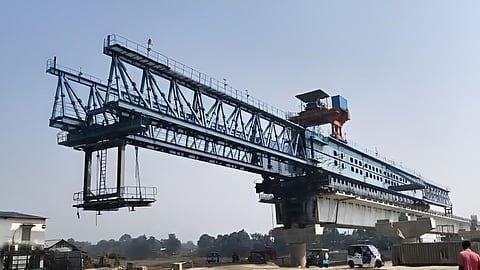
Several more bridges are currently under construction across the state.
“The Brahmaputra is no longer a barrier to development. It has become a connector,” the Chief Minister said, adding that better infrastructure has strengthened trade, tourism and access to healthcare and education, especially for people living in char areas and riverine belts.
He also noted that reduced travel time has supported industrial growth, improved emergency response capabilities and enhanced connectivity with neighbouring states and national highways.
