
- Home
- Live Blog
- Breaking News
- Top Headlines
- Cities
- NE News
- Sentinel Media
- Sports
- Education
- Jobs
Guwahati: Bodoland University has strengthened its international research collaboration through a recent academic programme in Japan under the leadership of Prof. Hemen Sarma.
According to an official statement, the initiative reflects the university’s expanding global academic presence and its commitment to promoting knowledge exchange, advanced research training and international partnerships in emerging scientific fields.
Prof. Sarma, Head of the Department of Botany, was awarded the JSPS Visiting Research (Core-to-Core) grant to undertake research in Japan.
"The grant is supported by the Japan Society for the Promotion of Science as part of its international collaboration programme aimed at strengthening global research networks and academic exchanges," the statement said.
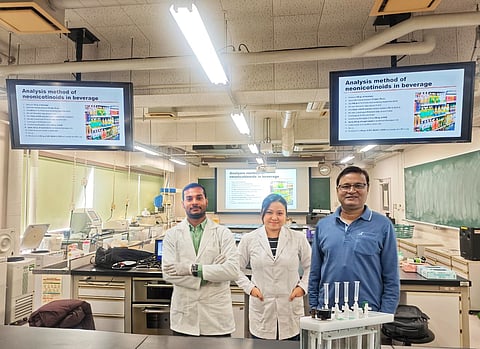
As part of the programme, Prof. Sarma carried out a one-month visiting research assignment at the Laboratory of Toxicology under the Faculty of Veterinary Medicine at Hokkaido University. The research was conducted within the framework of the One Health approach, which emphasises the interconnection between human, animal and environmental health.
During the visit, Prof. Sarma worked with international experts and received hands-on training in advanced laboratory facilities and modern analytical instruments, particularly in the areas of toxicology and environmental health.
The collaboration also created opportunities for young researchers from Bodoland University. Two PhD scholars — Mr. Bappay Sen and Ms. Suprity Shyam — were invited under the same collaborative framework and are continuing their research and training activities in Japan.
The research programme included practical training in environmental toxicology, covering the analysis of pesticide residues in beverages and urine samples, detection of heavy metals in animal tissues and blood samples, and assessment of mercury levels in cosmetics and hair.
The team also conducted advanced analysis of PFAS (per- and polyfluoroalkyl substances) in soil and feed samples, which are considered emerging pollutants due to their persistence in the environment and potential health impacts.
Additional laboratory sessions involved mouse dissection and preparation of brain tissue samples for metabolomic studies to understand biochemical changes linked to toxic exposure.
The programme also enabled interaction with scientists and scholars from several countries, including Thailand and Zambia, creating a platform for exchanging ideas and discussing environmental and toxicological challenges at the international level.
The visiting scholars also participated in outdoor and cultural activities at the Sapporo Bankei Ski Area during their stay.
Prof. Sarma said that international exposure of this kind plays an important role in strengthening advanced research capabilities and building sustainable global academic partnerships.
"The experience would contribute to improving research and training at Bodoland University," he added.
The development highlights Bodoland University’s growing engagement in interdisciplinary research related to health, environment and toxicology and is expected to contribute to knowledge transfer and research capacity building.
