
- Home
- Live Blog
- Breaking News
- Top Headlines
- Cities
- NE News
- Sentinel Media
- Sports
- Education
- Jobs
STAFF REPORTER
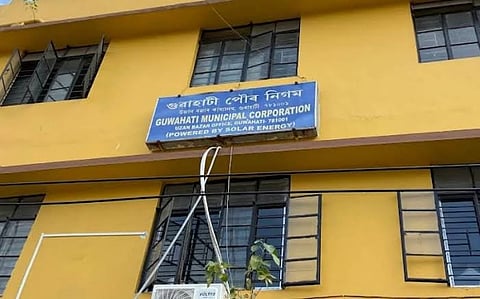
GUWAHATI: The Guwahati Municipal Corporation’s (GMC) decision to introduce a uniform monthly garbage collection fee of Rs 30 per household has shifted the spotlight from the amount being charged to a larger question—whether the civic body can ensure regular, accountable waste collection in a city where residents say they have long paid varying fees but continue to face irregular services.
Over the past decade, Guwahati’s rapid urban expansion has placed increasing pressure on its waste management system. With new residential colonies, apartment complexes, and commercial establishments adding to the city’s daily waste generation, residents argue that the existing collection mechanism has failed to keep pace.
Last month, Guwahati Mayor Mrigen Sarania announced the introduction of a standardised Rs 30 monthly user fee, describing it as a step towards streamlining garbage collection across the city. While NGOs had earlier collected waste management charges in select localities, the GMC said the new system would bring uniformity under the civic body’s supervision.
However, residents of Hatigaon, Beltola, and Kahilipara questioned the announcement, claiming that garbage collection charges have been levied in their areas for years, often at rates much higher than the newly announced fee.
A resident of Hatigaon near Little Flower School alleged that apartment residents are charged between Rs 800 and Rs 1,000 for waste collection, with additional payments demanded whenever excess garbage is generated. The complaints extend beyond the issue of fees. Residents in several localities alleged that garbage collection remains irregular despite monthly payments, forcing many households to store waste for longer periods or resort to dumping it at roadsides. A resident of Ajanta Path claimed that collection workers receive monthly payments but frequently fail to adhere to fixed collection schedules.
Contractors, however, argue that operational challenges also contribute to the problem. They cite delayed or non-payment of user fees by some households, improper waste disposal practices, and the absence of waste segregation at source as major obstacles to efficient collection. The dispute has also exposed a lack of public awareness and infrastructure for segregating wet and dry waste. While contractors blame residents for failing to separate waste, many households maintain that they have never received adequate guidance or facilities to implement waste segregation.
As the GMC prepares to roll out a citywide fee structure, residents say the real test will not be the collection of Rs 30 but whether the civic body can finally establish a transparent, reliable, and accountable waste management system befitting a Smart City, ending years of confusion over charges and inconsistent services.
