
- Home
- Live Blog
- Breaking News
- Top Headlines
- Cities
- NE News
- Sentinel Media
- Sports
- Education
- Jobs
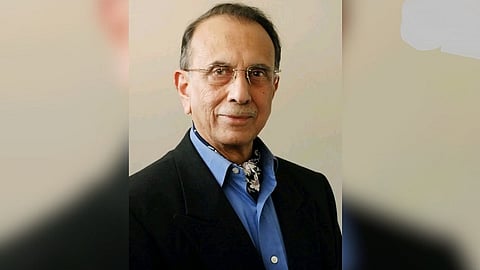
To a large section of Assamese readers, he existed simply as ‘Prantik Baruah’. His personal identity dissolved seamlessly into the identity of ‘Prantik’, the magazine he nurtured for more than four decades with rare discipline, patience, and intellectual honesty. From the first issue published in December 1981 to his final days, Pradip Baruah lived almost entirely for the ‘Prantik’, shaping it not merely as a literary periodical but as a moral and intellectual space in Assamese public life.
Born on 10 September 1937, Pradip Baruah was the son of the legendary journalist and cultural figure Radha Govinda Baruah. Yet he never sought refuge in inherited stature. His mind remained deeply engaged with reading, reflection, and writing. Literature, for him, was not ornamentation; it was a social responsibility. That conviction found its fullest expression in the ‘Prantik’ magazine. At a time when Assamese society was passing through ideological confusion and cultural upheaval, Pradip Baruah envisioned a magazine rooted in rational thought, scientific temper, and ethical clarity. Under his editorship, ‘Prantik’ became a platform where superstition was questioned, dogma challenged, and reason defended quietly but firmly. He valued ideas over personalities, substance over popularity, and sincerity over spectacle.
As an editor, Pradip Baruah was neither authoritarian nor indulgent. He demanded discipline from writers but offered something far rarer in return: trust. Established voices and unknown contributors found equal space if the writing carried honesty and thought. Alongside stalwarts such as Chandraprasad Saikia, Homen Borgohain, and Lakshminandan Borah, he nurtured generations of new writers, guiding them not with loud instruction but with careful editing, valuable notes, and patient encouragement. For many, like me, he was a mentor whose faith became the foundation of their literary confidence.
Personally, Pradip Baruah embodied restraint and simplicity. He avoided public display, remained distant from power circles, and allowed his work to speak on his behalf. His life followed a rhythm of reading, editing, correspondence, and contemplation. Even during prolonged illness in later years, he remained mentally alert, concerned about the continuity and integrity of the ‘Prantik.’ He passed away on 14 January of 2026, leaving behind a silence that felt unusually heavy in Assam’s intellectual landscape.
Like countless readers of my generation, I grew up with the ‘Prantik’ also. Through his memoir ‘Swagatokti’, I came to know the man behind the pages more intimately. Though I never met him in person, our exchanges, first through letters during my college days and later over the mobile phone, created a bond marked by warmth and generosity. Once, articles sent to the ‘Prantik’ often returned with his handwriting in the margins, gentle but precise. Even when personal circumstances disrupted my own writing journey, his encouragement never wavered.
Pradip Baruah never sought to be remembered. Yet memory has its own ethics. For over forty years, he carried the duty of editorial responsibility with rare integrity, proving that commitment need not be loud to be lasting. His life reminds us that institutions are built not by ambition alone but by sustained ethical labour. Pradip Baruah may no longer be with us, but the quiet flame he lit continues to burn in every thoughtful reader, in every honest writer, and in every page of the ‘Prantik’ that still speaks with clarity and conscience. His absence is an irreplaceable loss; his legacy remains a continuing presence.
Neelim Akash Kashyap
Also Read: All Assam Journalists’ Union (AAJU) expresses condolences on noted journalist Pradip Baruah’s demise
