
- Home
- Live Blog
- Breaking News
- Top Headlines
- Cities
- NE News
- Sentinel Media
- Sports
- Education
- Jobs
STAFF REPORTER
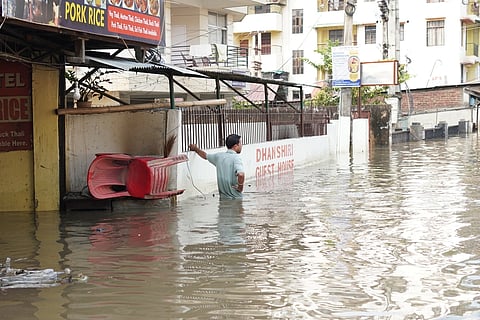
GUWAHATI: For thousands of residents in Guwahati, the arrival of the monsoon has become a source of anxiety rather than relief. Each year, heavy rainfall submerges several low-lying areas of the city, disrupting daily life, damaging property, and raising persistent questions about accountability.
Localities such as Rukminigaon, Hatigaon, Anil Nagar, Nabin Nagar, parts of Beltola, Chandmari, and Maligaon continue to face severe waterlogging during every spell of intense rain. In many cases, floodwaters remain for hours or even days, affecting homes, roads, and businesses.
Residents say the consequences extend far beyond inconvenience. Flooding frequently damages household items, electrical appliances, vehicles, and shop inventories. For middle- and lower-income families, such recurring losses are often difficult to absorb.
Experts attribute the situation to a combination of rapid urbanisation, shrinking wetlands, and inadequate drainage infrastructure. Encroachment has reduced natural water bodies that once acted as buffers, while existing drains remain clogged or insufficient to handle the growing volume of runoff. Ongoing construction activities and unregulated development have further strained the city’s already fragile system.
A shopkeeper from Hatigaon described the recurring crisis: “Every monsoon, water enters my shop. I have to shift goods overnight, repair damage, and sometimes shut down for days. There is no compensation or support. We are left to manage on our own.”
Residents from Rukminigaon echoed similar concerns. “The water rises within minutes of heavy rain. We barely get time to prepare. Our furniture and appliances get damaged every year, and the expenses keep increasing,” a local resident said.
In Kahilipara, homeowners pointed to the long-term financial strain caused by repeated flooding. “We invested our life savings to build our house, but every year we spend again on repairs. We have raised the floor level and installed pumps, but nothing seems sufficient,” another resident said.
Despite repeated assurances from authorities, residents say there has been little visible improvement on the ground. The absence of a structured compensation mechanism for property damage has added to public dissatisfaction, with many questioning whether the burden of systemic failures is being unfairly shifted onto citizens.
While civic agencies continue to announce reviews and mitigation plans, the recurring nature of urban flooding has exposed gaps in planning, infrastructure, and enforcement. As the monsoon approaches once again, residents remain uncertain whether the city will witness meaningful change or continue to endure the same cycle.
For many in Guwahati’s flood-prone areas, the season now brings not just rain, but the looming risk of financial, physical, and emotional loss—and an unanswered question: who will be held accountable?
Also Read: CPI(M) Stages Protest in Guwahati Over Artificial Flooding, Demands Compensation for Victims
