
- Home
- Live Blog
- Breaking News
- Top Headlines
- Cities
- NE News
- Sentinel Media
- Sports
- Education
- Jobs
Dirty streets in a smart city: A combination of contrasts
STAFF REPORTER
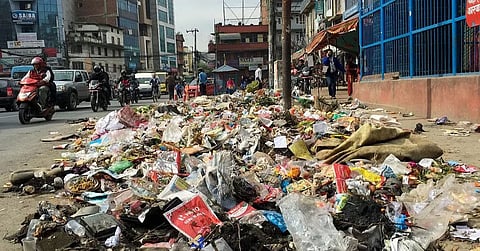
GUWAHATI: Despite a series of initiatives, enforcement measures and cleanliness drives undertaken by the Guwahati Municipal Corporation (GMC), roadside garbage dumping continues to remain a persistent civic problem across the city, raising serious questions over the effectiveness of the corporation's waste management system and accountability of the authorities.
From unattended garbage piles along busy roads to recurring dumping spots in residential localities, the ground reality appears to tell a different story from the civic body's repeated announcements. While GMC continues to introduce new measures to tackle the problem, residents say there is little visible improvement in the city's overall cleanliness.
The corporation is now planning to install AI-enabled CCTV cameras, around 10 to 15 in each ward, to identify illegal garbage dumping, generate alerts and strengthen spot-fine enforcement. The move is aimed at identifying offenders and keeping a closer watch on locations that have repeatedly emerged as dumping points.
However, residents question whether surveillance cameras and penalty mechanisms alone can address a problem that has continued despite several previous interventions.
Diren Bhaisya, a resident of Beltola, expressed dissatisfaction over the lack of visible improvement despite multiple initiatives announced by the civic body.
"After doing so many things, we are still not seeing any change on the ground. Schemes seem to be introduced only for show, while funds continue to be sanctioned. But what is the actual outcome? Who is responsible for ensuring that these initiatives deliver results?" he questioned.
He also pointed to measures such as mandatory four-stream waste segregation, recovery facilities and vehicle tracking systems, questioning whether these mechanisms have translated into tangible improvements in waste collection and disposal.
"Four-stream segregation, recovery facilities and vehicle tracking are all being talked about and implemented. But what are the results? If garbage continues to pile up on roadsides, who will take responsibility?" he added.
Another resident pointed out that public littering and repeated dumping at identified locations were also linked to people's habits and lack of civic responsibility. According to the resident, unless citizens change their behaviour and cooperate with the authorities, even stricter enforcement measures may fail to achieve lasting results.
The challenge, therefore, is not limited to installing surveillance systems or imposing fines. Tackling roadside littering, household waste mismanagement and commercial garbage disposal requires consistent monitoring, regular collection, effective enforcement against repeat offenders and active participation from residents and business establishments.
With commercial establishments also contributing to the city's daily waste generation, the need for sustained monitoring and accountability becomes even more pressing.
While AI-enabled cameras may help identify offenders, the larger question remains whether GMC can ensure that garbage is collected on time, properly segregated, transported and disposed of scientifically.
For a city aspiring to strengthen its Smart City image, the persistence of roadside garbage raises an uncomfortable question: Will Guwahati finally become cleaner, or will its cleanliness initiatives remain confined to announcements, schemes and sanctioned funds?
