
- Home
- Live Blog
- Breaking News
- Top Headlines
- Cities
- NE News
- Sentinel Media
- Sports
- Education
- Jobs
Two films from Northeast India, exploring cultural identity, indigenous traditions and human emotions, have been selected for the Indian Panorama sections of the 57th International Film Festival of India (IFFI).
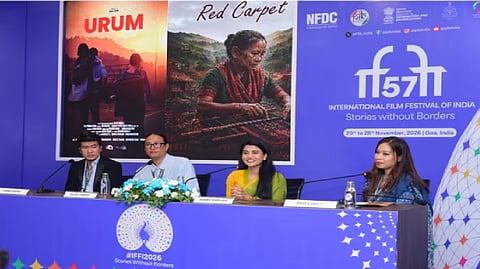
'Red Carpet', an Assamese documentary directed by Aimee Baruah, features in the Indian Panorama Non-Feature Film section, while 'Urum', directed by Duyu Tabyo, has been selected for the Feature Film category.
The directors shared insights into their films and filmmaking journeys at a press conference in Goa.
'Red Carpet' explores the traditional handloom weaving heritage of the Karbi community in Assam's Karbi Anglong district, where the centuries-old craft faces challenges from modernisation and changing lifestyles. The documentary traces a traditional weaver's journey from Donkamokam village to the red carpet of Cannes, showing how a handwoven fabric became a symbol of cultural identity, pride and hope.
Baruah, an award-winning actor, producer and filmmaker pursuing her PhD, spoke about taking a traditional Assamese handwoven fabric to the prestigious Cannes red carpet. She highlighted the craftsmanship of local weavers and said the international recognition had brought greater visibility to the region's indigenous heritage. She also urged younger generations to take pride in their language, culture and traditions and help preserve them.
'Urum', directed by independent filmmaker and cultural practitioner Duyu Tabyo, explores grief, memory and indigenous beliefs through the story of a father struggling to cope with the loss of his young daughter in a remote mountain community of Arunachal Pradesh.
Tabyo said the film was inspired by an incident he witnessed during his childhood in Ziro, involving a father grieving the loss of his daughter. The memory stayed with him for years and eventually became the foundation of the film. He said he sought to explore the psychological and emotional state of a grieving father rather than convey a specific moral message.
Tabyo described the film's selection at IFFI as significant recognition for Arunachal Pradesh's emerging film industry and expressed hope that it would encourage more young filmmakers from the state to tell their stories.
He said making 'Urum' in the indigenous Nishi language was a conscious decision to preserve its authenticity and give greater visibility to the language. Expressing concern over younger generations losing touch with indigenous languages, he described the film as an effort to preserve the community's linguistic heritage.
Tabyo also called Northeast India an unexplored cinematic landscape with considerable storytelling potential. He said cinema could serve as a medium for social awareness and change, while documenting indigenous stories, languages and ways of life for future generations, a press release said.
Also Read: DPIFF Awards 2026: Taylor Swift, James Cameron and Samay Raina Among Winners
