
- Home
- Live Blog
- Breaking News
- Top Headlines
- Cities
- NE News
- Sentinel Media
- Sports
- Education
- Jobs
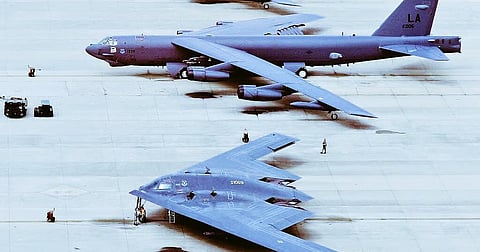
Washington: Senior US Air Force officials told lawmakers that the growing military threat from China is forcing the Pentagon to reconsider whether its planned fleet of 100 B-21 stealth bombers will be sufficient for future conflicts.
During a House Armed Services subcommittee hearing, Lieutenant General David Tabor said the Air Force now believes it may need more than 100 B-21 bombers to operate effectively in highly contested environments. However, he added that internal reviews are still underway to determine the final requirement.
Republican Congressman Rob Wittman said the global security environment has changed significantly since the B-21 programme began over a decade ago, calling the bomber critical for future high-intensity warfare.
The hearing focused on the Air Force’s fiscal year 2027 budget request and the urgent need to modernise ageing bomber, tanker and airlift fleets. Subcommittee chairman Trent Kelly warned that US adversaries were rapidly advancing military capabilities to challenge America’s technological edge.
Air Force acquisition chief William Bailey defended ongoing efforts to improve the survivability of aerial refuelling aircraft and mobility fleets. He said the Pentagon was investing in advanced communications systems, satellite connectivity and defensive countermeasures to protect aircraft operating near contested zones.
Tabor also said the Air Force plans to modernise the KC-135 tanker fleet over the next six years with upgraded communication and tactical data systems.
Lawmakers additionally raised concerns over drone warfare lessons from Ukraine and the Middle East. Bailey acknowledged the challenge posed by cheap drones, saying using costly missile interceptors against low-cost unmanned systems was unsustainable. (IANS)
