
- Home
- Live Blog
- Breaking News
- Top Headlines
- Cities
- NE News
- Sentinel Media
- Sports
- Education
- Jobs
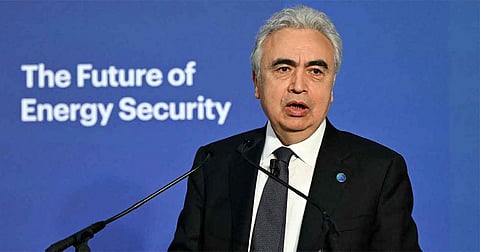
SINGAPORE CITY: The International Energy Agency (IEA) has issued a grave warning about global energy security, with its Executive Director, Fatih Birol, stating that the world is facing the "biggest energy security threat in history." According to Birol, the global market has already lost 13 million barrels per day of oil, along with major disruptions in vital commodities. Speaking at an industry event in Singapore, Birol expressed concerns over the ongoing conflict involving Iran and the closure of the Strait of Hormuz, which has drastically affected energy transport. He warned that these disruptions could lead to "the largest energy crisis we have ever faced."
Birol emphasized the need for national governments to bolster economic resilience by prioritizing alternative energy sources. He predicts that the energy crisis will accelerate the transition to renewable and nuclear power, with solar, wind, and electric vehicles seeing significant growth. However, the disruption may also push some countries back toward traditional fossil fuels, particularly coal, as a short-term solution.
A key point of disruption remains the Strait of Hormuz, a vital maritime route for oil, which once transported 20 million barrels of oil per day. Currently, the waterway is blocked by a "double-blockade," with both Iran and the United States preventing vessels from passing. The IEA has warned that this closure will likely stifle global economic growth, raise inflation, and potentially lead to energy rationing.
One of the hardest-hit sectors is aviation, particularly in Europe, which traditionally relied on the Middle East for 75% of its jet fuel. With the closure of the Strait, Europe is facing an "imminent jet fuel crunch." While efforts are underway to source fuel from the U.S. and Nigeria, Birol cautioned that without additional imports, Europe may face significant challenges. He suggested that European authorities might need to consider measures, including reducing air travel, if the crisis persists. (ANI)
Also Read: West Asia energy output may take two years to recover: International Energy Agency (IEA)
