
- Home
- Live Blog
- Breaking News
- Top Headlines
- Cities
- NE News
- Sentinel Media
- Sports
- Education
- Jobs
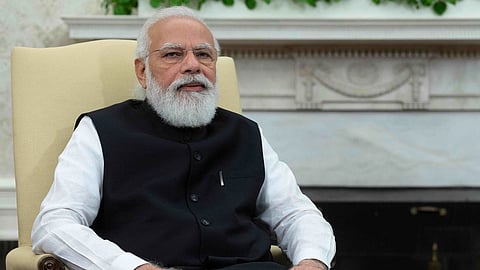
New Delhi: As Prime Minister Narendra Modi completes two years of his third term in office, security experts and officials are highlighting one of the most significant achievements of his administration's counter-terrorism strategy-the dismantling of the Indian Mujahideen (IM), once considered India's most dangerous homegrown terror outfit.
The issue of terrorism featured prominently during Narendra Modi's campaign for the 2014 Lok Sabha elections. At a time when India was witnessing frequent bomb attacks, the Indian Mujahideen had emerged as a major security threat, carrying out a series of deadly strikes across the country. Modi had then promised that if elected, his government would deal with terrorism firmly and decisively.
One of the defining moments before the 2014 elections was the BJP's Hunkar Rally at Gandhi Maidan in Patna on October 27, 2013. More than 300,000 people had gathered for the event when a series of explosions triggered by improvised explosive devices (IEDs) rocked the venue and surrounding areas. Six people lost their lives and over 80 were injured. Despite the security threat, Modi proceeded with the rally, urging restraint and unity.
According to officials familiar with the government's security strategy, dismantling the Indian Mujahideen became an immediate priority after Modi assumed office in May 2014. The process had begun with the arrest of the outfit's co-founder Yasin Bhatkal in 2013, but security agencies intensified operations between 2014 and 2017, eventually crippling the organisation.
Officials say the government provided operational autonomy to intelligence and security agencies, allowing them to aggressively target the outfit's leadership, finances and recruitment networks. Amendments to the Unlawful Activities (Prevention) Act (UAPA) enabled authorities to designate individual operatives as terrorists, facilitating action against key figures such as Riyaz and Iqbal Bhatkal.
The National Investigation Agency (NIA) was strengthened through structural reforms, leading to successful prosecutions of several arrested operatives. Simultaneously, agencies focused on disrupting hawala channels and illicit funding networks that sustained the organisation.
Security officials also point to enhanced intelligence gathering, proactive policing and international cooperation that helped track down operatives hiding abroad. Bases linked to the outfit in Azamgarh, Darbhanga and Pune were dismantled, while crackdowns on organisations such as SIMI and PFI weakened recruitment pipelines.
Officials maintain that the broader strategy not only dismantled the Indian Mujahideen but also significantly reduced the threat posed by homegrown terror networks, strengthening India's internal security framework over the past decade. (IANS)
Also Read: Prime Minister monitoring NEET paper leak issue: Centre informs Supreme Court
