
- Home
- Live Blog
- Breaking News
- Top Headlines
- Cities
- NE News
- Sentinel Media
- Sports
- Education
- Jobs
OUR CORRESPONDENT
ITANAGAR, Oct 8: High-altitude areas of Arunachal Pradesh's Tawang support a rich diversity of wild bees, including bumblebees, according to a recent field study by the Zoological Survey of India (ZSI), which stressed the need to protect alpine flowering habitats vital for pollinators.
The survey, conducted from September 15 to October 7 under the National Mission on Himalayan Studies (NMHS), covered areas between 2,000 and 4,700 metres above sea level, including Sela Pass, Bumla Pass, Nagula, Sangetsar Tso, Chumi Gyatse Falls and Jang.
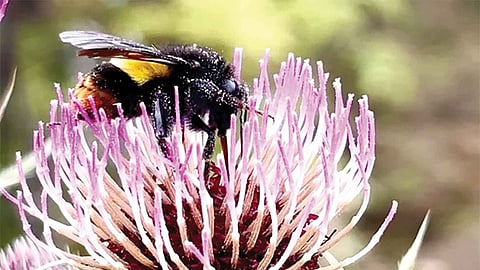
The ZSI team recorded bees belonging to four families - Apidae, Megachilidae, Andrenidae and Halictidae - with particular focus on bumblebees and the flowering plants that provide them nectar and pollen.
The researchers identified Cirsium species, Rose Carpet Knotweed (Bistorta vacciniifolia), locally known as Petma Mento, and Cicerbita alpina as important food sources. They observed bumblebees regularly visiting these flowers.
The study noted that Tawang's brief flowering season made the availability of diverse flowering plants important for sustaining pollinators. Agricultural fields, kitchen gardens and flowers around human settlements also contributed to nectar and pollen availability.
The researchers warned that changes in alpine vegetation, habitat disturbance and climate-related shifts in flowering cycles could reduce food availability for high-altitude pollinators. They said conservation efforts should therefore protect both bees and the flowering habitats that support them.
The findings are expected to provide baseline data for further studies on bee diversity, bee-plant relationships and seasonal floral resources, besides supporting future habitat mapping, monitoring and conservation programmes in Tawang and other parts of the Eastern Himalayas.
Also Read: Arunachal: Lecture series explores contemporary Hindi poetry at Pasighat college
