
- Home
- Live Blog
- Breaking News
- Top Headlines
- Cities
- NE News
- Sentinel Media
- Sports
- Education
- Jobs
A CORRESPONDENT
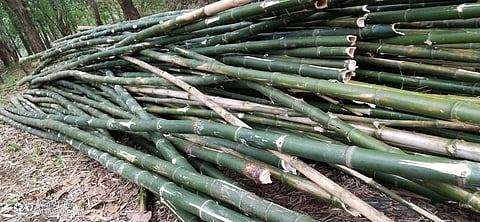
BOKAKHAT: The bamboo-based ethanol project of Numaligarh Refinery Limited (NRL) had raised hopes among local farmers of a steady market for their bamboo produce. However, allegations have surfaced that the project has so far failed to deliver the expected benefits. For bamboo growers in various parts of Golaghat district, who had once seen a ray of hope in the project, the bamboo grown in their own backyards has now become an economic burden. As the project is reportedly not procuring bamboo locally, farmers are being forced to sell their produce to other states through middlemen at very low prices.
A recent example of this situation can be seen in Borpathar village under Mahura Mouza in Bokakhat co-district. According to some farmers of the village, three truckloads of locally grown Jati, Bholuka, and Makal bamboo have been dispatched to a paper mill at Amlai in Madhya Pradesh through middlemen within the past week. However, the farmers have received only meagre prices for their produce. Farming families are growing increasingly frustrated as they are unable to obtain remunerative prices despite investing time and effort in growing, maintaining, and harvesting bamboo.
It may be recalled that since work on the bamboo-based ethanol project near Numaligarh Refinery began in 2018, many farmers in Khumtai, Bokakhat, Komargaon, Numaligarh, Gelekiyal, Baruagaon, Thengalgaon, and other areas of Golaghat district had hoped to open up a new source of income through the sale of indigenous bamboo grown on their land.
According to farmers of Mahura Borpathar village, almost every household in the village has varying quantities of indigenous Jati, Bholuka, and Makal bamboo growing in its backyard. Despite these bamboo varieties having matured over several years, they have remained largely unused due to the absence of a suitable market.
On the other hand, it is learnt that during the initial phase of the bamboo-based ethanol project, NRL authorities had supplied bamboo saplings to some farmers in the Mahura Borpathar area. Although many of those saplings failed to grow as expected, farmers had primarily been counting on the indigenous bamboo already available in abundance in the region to generate income through the project.While the vision of transforming the rural economy through a bamboo-based industry remains on one side, the reality of farmers being compelled to sell their backyard-grown bamboo to other states at low prices presents a serious question about the industry's relationship with local farming communities.
Also Read: Assamese Crime Thriller ‘TIBRO’ Hits Theatres with a Tale of Revenge and Mystery
