
- Home
- Live Blog
- Breaking News
- Top Headlines
- Cities
- NE News
- Sentinel Media
- Sports
- Education
- Jobs
OUR CORRESPONDENT
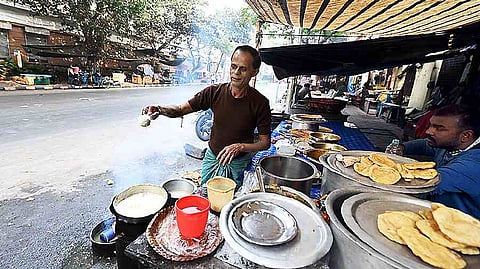
DIGBOI: Digboi, the historic oil city, is facing an intensifying civic crisis as temporary fast-food stalls continue to proliferate across street corners and busy market stretches. What began with a handful of makeshift kiosks has now expanded into widespread encroachment, shrinking parking spaces, obstructing traffic flow, and contributing to rising filth across the town.
At Charali Bazaar along the National Highway, the situation has become particularly alarming. Rows of unauthorized fast-food carts now occupy large portions of the designated parking stretch, forcing vehicles onto the highway and creating dangerous, accident-prone bottlenecks. Residents warn that the issue, long neglected, has now reached a breaking point.
Amid the growing public outcry, the role of parking vendors, market vendors, and tax collectors has come under sharp scrutiny. Citizens question how these stalls continue to operate without permission and why corrective action remains absent.
Adding to the chorus of criticism, several residents have pointed towards the Tinsukia district administration and the Food Safety Department, expressing frustration over what they perceive as limited on-ground monitoring. Many claim that Food Safety officials are 'rarely seen' conducting checks in markets, shops, hotels, or restaurants. Citizens argue that stronger and more regular inspections are essential to ensure compliance with hygiene and food safety standards.
At the municipal level, the silence of the Digboi Municipality has puzzled many. Locals express dissatisfaction over what they describe as the 'conspicuous inaction' of the authorities, noting that unlicensed stalls continue to proliferate despite repeated complaints. Some residents allege that irregular fee collection by certain tax handlers has created an environment where temporary carts operate unchecked, undermining the town's beauty and sanitation.
The hygiene situation is deteriorating rapidly. Many of these stalls operate without following basic food safety norms. Waste from the fast-food carts-plastic packets, plates, and leftover food-routinely collects at street corners and clogs drains. In several areas, vendors have even positioned their stalls directly above open drains, raising serious health concerns.
Despite regular grievances and increasing public frustration, there has been little visible intervention from the authorities. Citizens insist that a coordinated effort-strict enforcement, designated vending zones, food safety inspections, and transparent tax practices-must be implemented without delay.
