
- Home
- Live Blog
- Breaking News
- Top Headlines
- Cities
- NE News
- Sentinel Media
- Sports
- Education
- Jobs
A CORRESPONDENT
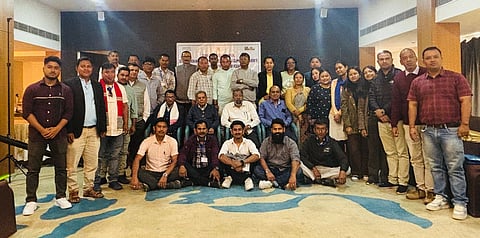
JORHAT: A two-day ‘People’s Consultation on Strengthening Humanitarian Response and Climate Resilience in the Brahmaputra Basin’ concluded on Friday at Jorhat, with the adoption of the People’s Declaration for a Resilient Brahmaputra Basin. The event was organized by the North-East Affected Area Development Society (NEADS) in collaboration with the Inter-Agency Group (IAG) of Assam and various local humanitarian civil society actors from across the Brahmaputra Valley, with support from Start Network.
The consultation brought together humanitarian practitioners, climate workers, community leaders, civil society organizations, youth groups, and women’s collectives to deliberate on the increasingly complex humanitarian and climate challenges affecting the Brahmaputra basin - particularly those stemming from recurrent floods, riverbank erosion, large-scale displacement, and shifting hydrological patterns influenced by climate change.
The programme opened with welcome remarks, an overview of the consultation’s objectives, and reflections on regional challenges delivered by Tirtha Prasad Saikia, Director of NEADS. This was followed by an inaugural keynote address from Ravindra Nath, noted development practitioner, who underscored the escalating vulnerability of riverine communities as climate-induced hazards intensify.
The consultation featured thematic sessions on humanitarian trends, climate change impacts and hydrological shifts across Assam. Speakers including Luit Goswami (Rural Volunteers Centre), Deborah Sangma (State IAG Assam), Wilfred Toppo (People’s Action for Development), Keshav Krishna Chatradhara (North-East Watertalk), and Rajen Saikia (District IAG Dhemaji) shared valuable insights into institutional gaps, ground realities, and the deepening risks experienced by vulnerable populations. The event also highlighted testimonies from community representatives who narrated experiences of displacement, livelihood losses, and longstanding indigenous coping practices shaped through generations of coexistence with the Brahmaputra. A key focus of the event was the exploration of collaborative pathways and locally led solutions. Participants worked in groups to discuss climate-resilient livelihoods, ecosystem restoration, community-based disaster response, local governance strengthening, social protection for the most vulnerable, and avenues for effective localization. The working groups presented actionable recommendations emphasising anticipatory action, community leadership, improved institutional coordination, and inclusive resilience-building across the basin.
The consultation culminated in the formal release of the People’s Declaration for a Resilient Brahmaputra Basin, synthesising the collective recommendations from the two-day deliberations. The declaration calls for people-centred, climate-informed, locally-led humanitarian action, with a strong emphasis on local leadership, localization of resources and decision-making, anticipatory action and community-driven resilience strategies that place vulnerable communities at the centre of future humanitarian and climate action.
Also Read: Brahmaputra Erosion Worsens in Majuli’s Salmora; Villagers Hold Prayers
