
- Home
- Live Blog
- Breaking News
- Top Headlines
- Cities
- NE News
- Sentinel Media
- Sports
- Education
- Jobs
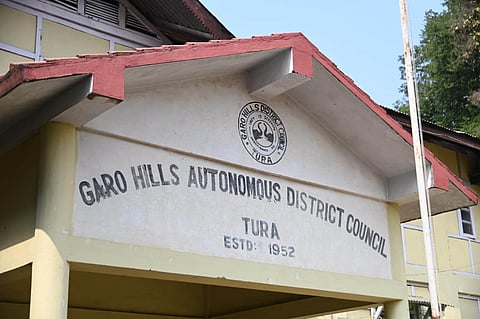
The Garo Hills Autonomous District Council (GHADC) has passed a landmark amendment to its rules, making it mandatory for all candidates contesting council elections to hold a valid Scheduled Tribe (ST) certificate — a decision being hailed as a historic moment for indigenous governance in the region.
The resolution was passed during a special session of the Council on Monday, marking what many are describing as a fundamental policy shift to reinforce the constitutional purpose of autonomous district councils as institutions of tribal self-governance.
Also Read: Meghalaya Cabinet extends GHADC term by six months; new CEM elected
Chief Minister and NPP national president Conrad K. Sangma attended a gathering of party cabinet ministers and MLAs at the NPP office in Tura following the passage of the resolution, and did not hold back in expressing what the development meant to him.
"This is a historic moment and a most crucial decision," Sangma said.
He noted that the District Councils were specifically created for the tribal communities of the region, and that ensuring only tribal candidates contest elections to these bodies was a logical and long-overdue step.
"For 74 years, no government or District Council has been able to achieve this, but today, under the NPP-led Executive Committee, I am filled with joy to see this decision finalised," he said.
Sangma also appealed for understanding and cooperation from all sections of society. "I hope that non-tribals will understand that the Council is specifically reserved for the indigenous people of the Northeast. I look forward to cooperation from all sides to ensure peace and harmony as we strive for the progress of the Garo Hills," he added.
The amendment was passed against the backdrop of an unusual political alignment in the GHADC. The ruling National People's Party (NPP) and the Opposition Trinamool Congress (TMC) have come together to form the Council's Executive Committee — a rare convergence that helped smooth the passage of the resolution during the special session.
The amendment is widely seen as a significant step in protecting the institutional integrity of autonomous district councils and ensuring that the governance of tribal areas remains in the hands of the indigenous communities they were designed to serve.
