
- Home
- Live Blog
- Breaking News
- Top Headlines
- Cities
- NE News
- Sentinel Media
- Sports
- Education
- Jobs
SHILLONG: Thousands of teachers and staff working in non-government schools and colleges in Meghalaya are set to finally receive structured provident fund benefits, after the state Cabinet on Wednesday approved the Meghalaya Non-Government School and College Employees Centralised Provident Fund Scheme, 2026.
The decision addresses a long-standing gap in the system — one that had left employees contributing to provident funds for years without any formal government-backed mechanism to manage or return those funds upon retirement.
Also Read: M’laya CM downplays NPP–TMC alliance talk, calls GHADC unity issue-based
Under an existing legacy Act, employees of aided private institutions had been making provident fund contributions — but in the absence of a clear operational framework, there was no structured process for disbursing those benefits when employees retired.
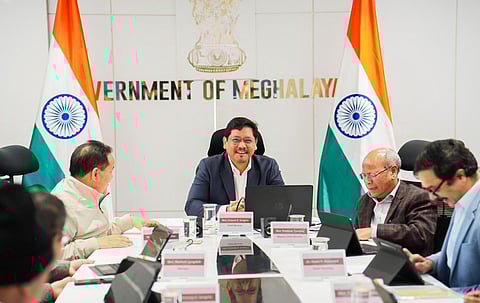
Chief Minister Conrad Sangma acknowledged the delay directly after chairing the Cabinet meeting in Shillong.
"Large numbers of non-government schools and colleges employees, based on the relevant act, certain contributions were being made, but the government did not have a proper scheme to implement this particular contribution," Sangma said.
"That was something that was pending for a long time — and that is what we have done today," he added.
The newly approved scheme formalises the process through which provident fund benefits will now be delivered to staff of deficit institutions — private schools and colleges that receive grant-in-aid from the government and have their salaries supported under the deficit system.
"Once this scheme is approved, the employees of the non-government schools and colleges will be getting the benefits of the Provident Fund," Sangma said.
The Cabinet's approval effectively sets up the administrative and financial mechanism needed to operationalise the accumulated contributions and ensure that eligible employees can access their retirement benefits in a timely and transparent manner.
The move is expected to bring significant relief to a large section of Meghalaya's teaching and non-teaching workforce employed in private aided institutions — a group that has long operated without the same level of retirement security available to government employees.
