
- Home
- Live Blog
- Breaking News
- Top Headlines
- Cities
- NE News
- Sentinel Media
- Sports
- Education
- Jobs
CORRESPONDENT
AGARTALA: Tripura Governor N Indrasena Reddy has called for comprehensive documentation of the traditional knowledge, folklore, songs and cultural practices of the state's 19 tribal communities to safeguard their indigenous heritage. He also proposed setting up a Telugu Chair at Tripura University to promote the language and encourage academic engagement with its literary traditions.
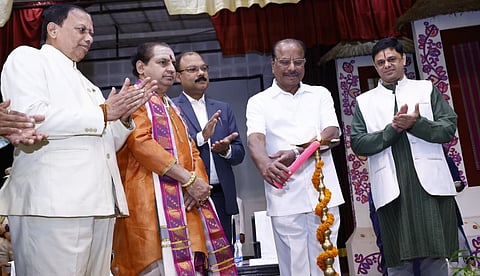
The Governor made the suggestions while addressing a one-day symposium on Ashtavadhanam, jointly organised by the Department of Sanskrit, Tripura University, and the Sahitya Akademi, New Delhi. The event marked the first presentation of the classical literary performance tradition in the Northeast. Padma Shri awardee and renowned Avadhani Madugula Nagaphani Sharma was the principal performer.
Expressing concern over the limited documentation of indigenous literary heritage, Reddy referred to Kokborok, which received official language recognition in Tripura 50 years ago. He observed that its written literary corpus remained relatively limited despite the recognition.
He said preserving a language required more than official status and stressed the need to systematically record its oral traditions and cultural expressions. Urging the Sahitya Akademi to take the initiative, he proposed an archival exercise covering the traditional songs, folklore and indigenous knowledge of all 19 tribal communities to prevent cultural practices and knowledge passed down through generations from disappearing.
The Governor also noted that thousands of Telugu-speaking families had settled in Tripura over several generations. He said a dedicated Telugu Chair, or Telugu Peetham, at Tripura University could promote the language, encourage research and strengthen cultural exchanges between the Northeast and other parts of the country. He suggested pursuing the proposal in line with the National Education Policy 2020.
Explaining the significance of Ashtavadhanam, Reddy said the tradition represented an intellectual discipline involving memory, concentration, mental agility and spontaneous poetic composition. He highlighted its central principle of Dharana, or the ability to retain and recall information, as particularly relevant at a time when people were increasingly dependent on technology.
Also Read: Manipur CM to Convene All-Community Meeting Before Christmas to Restore Peace
