
- Home
- Live Blog
- Breaking News
- Top Headlines
- Cities
- NE News
- Sentinel Media
- Sports
- Education
- Jobs
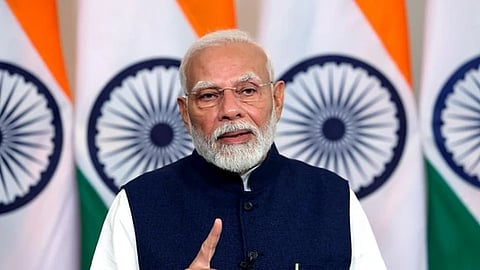
Leading tea industry associations from Assam and West Bengal have jointly approached the Prime Minister's Office, urging urgent amendments to a government mandate requiring producers to sell a minimum portion of their output through auction centres — a rule they warn could severely impact profitability and operational flexibility across the sector.
The formal representation was submitted to the PMO on April 16 by four major bodies: the Assam Bought Leaf Tea Manufacturers' Association (ABLTMA), North Eastern Tea Association (NETA), Bharatiya Cha Parishad (BCP), and the North Bengal Tea Producers' Welfare Association (NBTPWA).
The Tea (Marketing) Control (Second Amendment) Order, 2015, mandates that registered tea manufacturers sell at least 50 percent of their annual production through auction centres.
While the provision has been on the books for years, it remained largely unenforced — until a circular issued on February 27, 2026, by the Registration Authority moved to operationalise the requirement, triggering alarm across the industry.
Also Read: PM Modi visits Monohari TE in Dibrugarh; interacts with tea workers
The associations argue that compulsory auction sales place producers at a significant and unjustifiable disadvantage.
According to their submission, auction-based sales involve additional transaction costs of approximately Rs 10 per kilogram — nearly 5 percent of the average selling price, and a figure that often exceeds producers' net profit margins entirely.
The auction process also involves longer selling cycles, affecting cash flow and day-to-day operational efficiency. By contrast, ex-factory sales are considered far more cost-effective and time-efficient for producers.
The appeal underscores the scale of what is at stake. North India accounts for approximately 83 percent of India's total tea production, contributing around 1,120 million kilograms annually out of a national total of roughly 1,350 million kilograms.
The four associations together represent close to 60 percent of North India's tea output — making their collective voice a significant one in any policy conversation about the future of tea marketing in India.
The representation also draws attention to the findings of multiple expert committees constituted by the Tea Board over the years to examine the auction system. Despite recommending improvements to the system's efficiency, none of those committees have endorsed mandatory auction sales as a policy measure.
The associations have called on the government to reconsider the enforcement of the provision and adopt a more flexible, market-driven approach, submitting detailed financial and operational documentation alongside excerpts from expert committee reports to support their case.
