
- Home
- Live Blog
- Breaking News
- Top Headlines
- Cities
- NE News
- Sentinel Media
- Sports
- Education
- Jobs
Staff Reporter
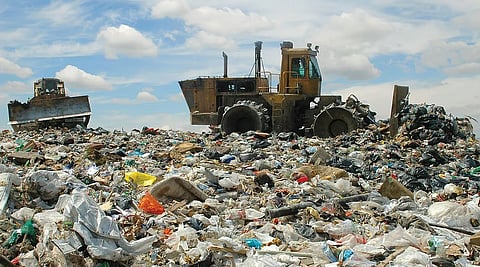
GUWAHATI: Solid waste management poses a major challenge in Assam. On average, urban Assam generates 1,402 tonnes of garbage per day, and 920 tonnes of waste is processed. The remaining 500 tonnes are either dumped or left unprocessed every day.
The crux of the problem lies in rapid urbanisation, lack of proper infrastructure, low rate of waste segregation at sources, lack of scientific waste disposal facilities, short collection of garbage, etc.
The Supreme Court has been monitoring the implementation of the Solid Waste Management Rules, 2026. The Supreme Court issued a directive for the entire nation regarding solid waste management.
The Assam Pollution Control Board (APCB) and Swachh Bharat Mission have geared up to implement the directive of the apex court. According to the rules, the segregation of waste at sources will be of four streams - wet waste, dry waste, sanitary waste and special care waste. The Supreme Court issued a directive that the district collectors and local bodies should monitor the waste segregation system.
In his interaction with the media here today, APCB Chairman Dr Arup Kumar Mishra said, "Commercial establishments like residential societies, schools, colleges, hotels, hospitals, malls, convention centres, tourist spots, marriage halls, etc., should have their bulk waste generator (BWG) facilities under certain conditions. APCB has asked both GMC and GMDA to ensure that BWG facilities are established for new buildings and to require existing buildings to set up BWG facilities in phases.
Mishra said, "Solid waste was a problem. However, with their recycling, it's an asset now."
Dr Mishra emphasized that waste management is no longer the exclusive mandate of pollution control boards but a collective operational duty for all local bodies, institutions and citizens.
Warning against unscientific disposal, Dr Mishra cited the relevant rule, which strictly prohibits throwing waste in municipal drains, dumping on roadsides, or open burning, while noting that wet waste and construction waste are barred from sanitary landfills, reserving landfill space exclusively for inert and residual waste. Dr Mishra also emphasized that existing legacy dumpsites must undergo biomining and bioremediation under time-bound action plans.
Presenting the operational roadmap for urban implementation, Sabyasachi Kashyap, Mission Director of Swachh Bharat Mission (Urban), detailed the concrete steps taken across Assam's urban centres. Following the Supreme Court's directives, detailed infrastructure audits are being conducted across all 96 urban local bodies, while town and country planning authorities are integrating mandatory SWM specifications and composite pits into building permissions for new constructions. Kashyap further reported that 59 urban local bodies have mapped their legacy waste sites, 561 garbage-vulnerable points out of 651 have been transformed and dedicated cleanliness measures have been instituted across 198 identified high-footfall tourist and pilgrimage spots. He added that citizen grievances are being actively resolved through the integrated Swachhtam digital platform.
Also Read: Jorhat Woman Allegedly Assaulted By Boyfriend And Investigation Underway Into Nimisha Thakuria Case
