
- Home
- Live Blog
- Breaking News
- Top Headlines
- Cities
- NE News
- Sentinel Media
- Sports
- Education
- Jobs
Staff Reporter
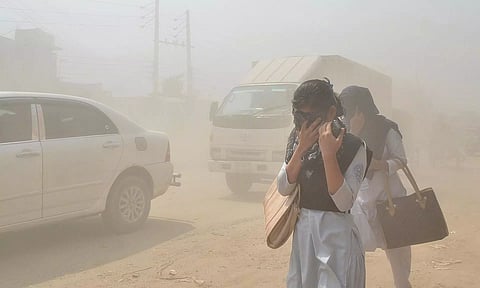
GUWAHATI: The Assam government has issued a notification introducing an emergency response action plan to tackle the rising air pollution in five non-attainment cities (NACs) of the state—Guwahati, Nalbari, Nagaon, Silchar and Sivasagar.
The notification, issued by the Environment, Forest and Climate Change Department, follows directions of the National Green Tribunal (NGT) in connection with application (681/2018), dated November 20, 2019. Under the new framework, authorities will implement graded emergency measures depending on the Air Quality Index (AQI) categories—moderate to poor, very poor, severe, severe+, or emergency.
For the most serious situation, severe+ or emergency, which happens when PM2.5 levels go over 300 µg/m³ or PM10 levels exceed 500 µg/m³ for more than 48 hours, or when the AQI goes over 500, authorities will stop trucks from entering the city except for essential goods, pause major construction projects, and ban heavy diesel vehicles from entering the affected cities. District administrations will also be empowered to take additional steps, including closure of schools, if required, the notification said.
During the Severe category (AQI 401-500), operations of brick kilns, hot mix plants, and stone crushers will be shut down. Restrictions may also be imposed on refinery and coke industries. Authorities have also been directed to intensify public transport, increase mechanised road cleaning and water sprinkling, and identify dust-prone road stretches, it said.
Under the Very Poor category (AQI 301-400), use of diesel generator sets and earth cutting will be prohibited. Parking fees in busy commercial areas may be increased by three to four times to discourage private vehicle use. Hotels and open eateries using coal or firewood will face restrictions, while barbecue restaurants may be closed. Public advisories will be issued urging respiratory and cardiac patients to avoid outdoor exposure.
According to the notification, for moderate to poor air quality (AQI 101-300), stricter measures include a ban on garbage burning, tighter pollution control in brick kilns and industrial units, mechanised road sweeping, water sprinkling on roads, pothole repairs, enforcement against visibly polluting vehicles, and stricter compliance with Pollution Under Control (PUC) norms.
The notification also mandates strict enforcement of dust control norms at construction sites, deployment of traffic police in vulnerable congestion zones, and implementation of the Supreme Court ban on firecrackers. Additionally, the government has directed wider public awareness through social media and mobile applications to inform residents about pollution levels, emergency control room contacts, reporting mechanisms for polluting activities, and actions being taken under different AQI levels.
Different departments, including the Pollution Control Board, Assam; the Transport Department; the Traffic Police; urban local bodies; district administrations; and public works agencies, have been designated as implementing authorities for the action plan.
Also Read: BPF Reaffirms Commitment to Holistic Development of State
