
- Home
- Live Blog
- Breaking News
- Top Headlines
- Cities
- NE News
- Sentinel Media
- Sports
- Education
- Jobs
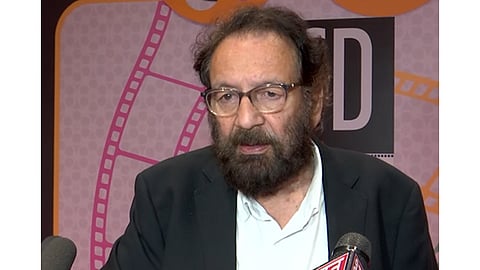
Veteran filmmaker Shekhar Kapur announced a key update on the much-anticipated sequel to 'Masoom' at the International Film Festival Delhi 2026, where he also spoke about AI's transformative role and Indian cinema's global future.
Directed by Shekhar Kapur in his debut, the 1983 film 'Masoom' was a poignant Hindi drama about a family's struggle to accept an illegitimate son. Starring Naseeruddin Shah and Shabana Azmi, it featured soulful music by R D Burman and lyrics by Gulzar. The film was celebrated for its sensitive storytelling and remarkable performances by child actors Jugal Hansraj and Urmila Matondkar. The film swept the 1984 Filmfare Awards, winning Best Film (Critics), Best Actor (Naseeruddin Shah), and Best Music Director (R D Burman). Its iconic soundtrack includes the timeless ghazal 'Tujhse Naraz Nahin Zindagi', the playful children's classic 'Lakdi Ki Kaathi', and the soulful 'Do Naina Aur Ek Kahani'.
Tentatively titled 'Masoom: The Next Generation', the upcoming film will reunite original cast members Naseeruddin Shah and Shabana Azmi, alongside Manoj Bajpayee and a fresh ensemble of actors.
Kapur revealed the project during an interactive media session at the International Film Festival Delhi (IFFD) 2026, where he also shared extensive insights into the evolving landscape of global cinema and the growing impact of Artificial Intelligence. Addressing the intersection of technology and art, Kapur highlighted AI's role in democratising the filmmaking process.
He noted that AI tools are breaking traditional barriers of budget and scale, allowing a young filmmaker with minimal resources to create visuals comparable to a high-budget cinematic production.
"Today, a child in 30,000 will make a film worth 300 crores," he said.
Kapur reflected on the analog era, recalling how it once took three hours to light a celluloid shot and how actors preferred specific cameras. He observed that cinema has always created its own reality, but today, AI tools can instantly generate that reality from a simple written paragraph.
Despite this technological leap, Kapur emphasized the inherent limitations of AI, defining it as an algorithmic scraping tool devoid of true human instinct. (ANI)
Also Read: Saurabh Shukla on Creativity: ‘True Art Begins When You Leave Your Baggage Behind’
